

Unit HK-014, full frame
The specimen frame. Fresh welds over old corrosion. The unit maintains itself, and its maintenance has opinions.

ASSET FILE // TERMINAL RESPONSE CLASS
Hunter-Killer class. Terminal stage of the ARES response ladder, reserved for targets that exceed Stamper and Sweeper capacity. Pursuit across vertical terrain, silent approach, precision removal. Substrate visual confirmations are rare because the class is rarely needed. Survivor reports are rarer for a different reason.
The frame on file is unit HK-014, drawn from deployment stock. It does not match the build specification. No unit inspected in the last four audits does.
UNIT ASSESSMENT
Chassis. Humanoid frame, reinforced. Armour plating in corporate white, now cracked, patched, and re-secured with non-standard fasteners. Sensor studs relocated from the specified array positions to points across the torso. The relocations are not random. They eliminate the blind zones documented in the original specification.
Cranial assembly. The plating reproduces a human skull in proportion and detail, down to dentition. Optical sensors sit in the orbital cavities. The configuration has no documented mechanical advantage. Field data suggests its advantage is not mechanical: monitored populations identify and flee this class faster than any other, including classes that are objectively more dangerous to them.
Markings. The factory stencil, ARES, remains legible on the chest plate. It is the only component of the original livery the unit has preserved through centuries of self-maintenance. Everything decorative was allowed to decay. The name was not. The audit declines to speculate on what a machine keeps on purpose.
Degradation, or maintenance. Corrosion, sediment, and material fatigue are present across the specimen. So are fresh welds. The units repair themselves with substrate materials, the way the substrate population repairs itself with corporate refuse. The audit notes the symmetry and moves on.
Operational doctrine. Hunter-Killers do not sweep. They are dispatched against a designated target, pursue it through terrain that defeats other classes, and return alone. Time between designation and resolution, per surviving records: hours. Records of a designated target surviving: none in the registry.
Standing discrepancy. Subject AST-05-0000 responds to imagery of this class with recognition-class latency. An erased disposal unit should recognize nothing. Cross-reference the subject file.
RESPONSE CLASSES
Unarmed in specification. Field encounters report otherwise. Discrepancy logged.
Dropped onto settlements judged unrecoverable. Resolves architecture, not individuals. The distinction matters to the ledger, not to the settlement.
Four-limbed, adapted articulation, erratic energy profile. Removes designated personnel and equipment intact. Executed sweep 05-812.
This file. Deployed when a target is judged worth the cost of certainty.
ASSET FRAMES
The specimen frame. Fresh welds over old corrosion. The unit maintains itself, and its maintenance has opinions.
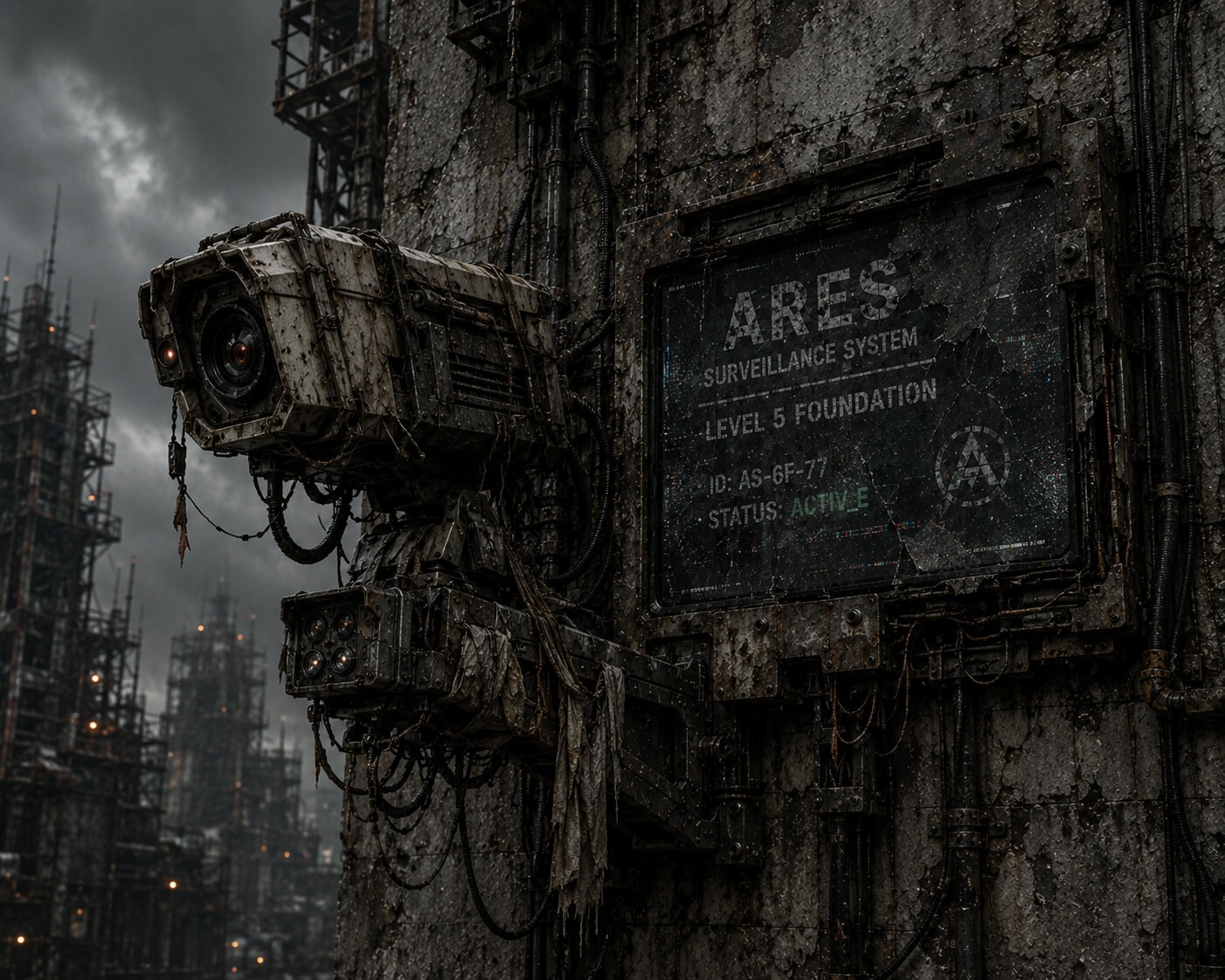
Designation begins as a sensor reading. This class is where a reading ends.
AST-05-0000, memory erased to fabrication level, recognition-class latency on contact. No mechanism on record.